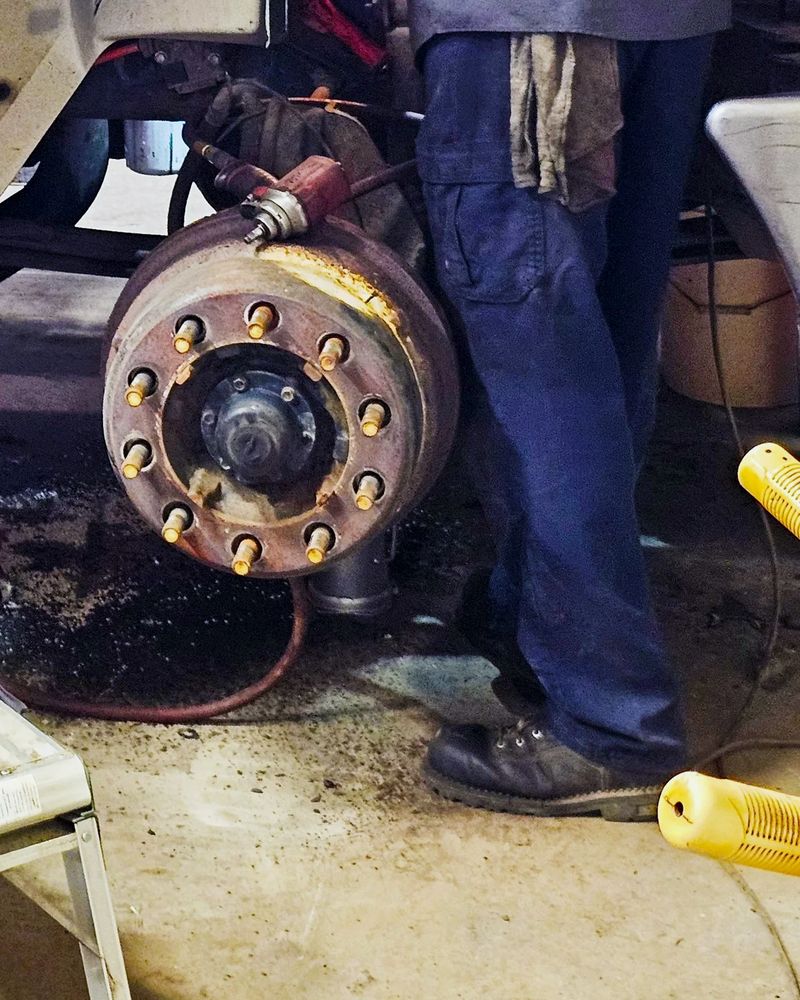
Why inspections matter
Federal rules require most commercial motor vehicles to pass a periodic inspection at least once every 12 months. Beyond the paperwork, an inspection is a chance to catch a worn part in the shop rather than on the side of the road.
Rules vary with what you run and how you use it, so check the current requirements for your operation, or call and ask us what to bring.
What an inspection looks at
An inspection works through the systems that matter most for safety, including:
- Brakes and brake components
- Steering and suspension
- Tires, wheels and rims
- Lights, reflectors and electrical
- Frame, coupling devices, exhaust and fuel systems
Before you come in
A quick walk-around can save you a return trip. Check your lights and reflectors, look over the tires, watch for fresh leaks under the truck and test your wipers and horn. Bring your last inspection paperwork if you have it.
If something doesn't pass
You'll hear exactly what we found and why it matters, along with your options and a realistic timeline. Because we're a working repair shop as well, the same team can talk you through getting the problem fixed.
Keeping inspections current
It's easy to lose track of an inspection date when a truck is busy. Many operators book the inspection alongside other planned maintenance, so the truck is only off the road once.
If you run more than one vehicle, keeping every date in one place makes it much harder for one to slip through. Call us Monday to Friday between 8:00 and 4:30 to ask about scheduling. We've served the Inland Northwest since 2000, so we're used to the questions.